


Modern menswear has lost all its quality, and history makes this fact impossible to ignore. A century ago, men wore suits with structure, real leather shoes, and headwear on a daily basis that were all built to last. Today’s clothes rely on synthetics, cheap construction, and fast fashion shortcuts. The decline of the suit, hat, and shoe tells the full story of how menswear completely fell apart. But this story can be reversed by choosing not to follow the trend of fast fashion; it could mean that quality could be restored in menswear and in the world.
According to The Gentleman’s Gazette, “As we started the 20th century, the suit, as we know it today, was pretty much developed.” This suit developed between 1901 and 1910 was during the reign of King Edward VII, the King of the British Empire. During this time, morning wear grew in style, taking over from the Victorian Era’s frock coat.
The era of morning wear would persist until the 1920s, when the lounge suit, which quickly evolved into the modern suit, took over in popularity. The Gentleman’s Gazette also notes “the 1930s are often referred to as the ‘golden age of classic menswear,’ in big part because of the way the suits were designed.”
The 1920s-50s is when the golden age of menswear took place and specifically peaked during the 1930s. Most men of the era wore full cut suits with high-waisted trousers, pleated fronts, a structured jacket, and high quality natural materials such as worsted wool and linen. This combination of quality and structure provided the men of the era with a look that is unparalleled today, especially compared with modern suits.
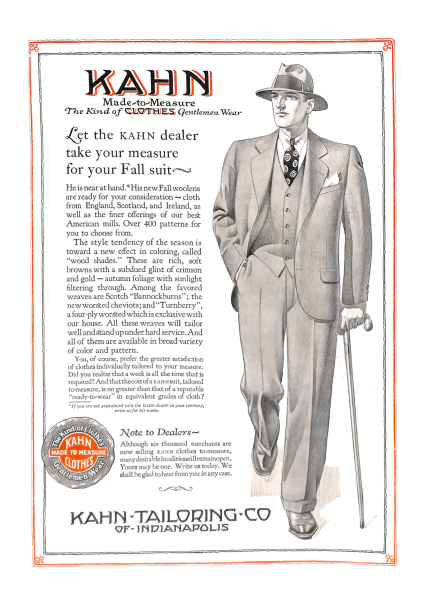
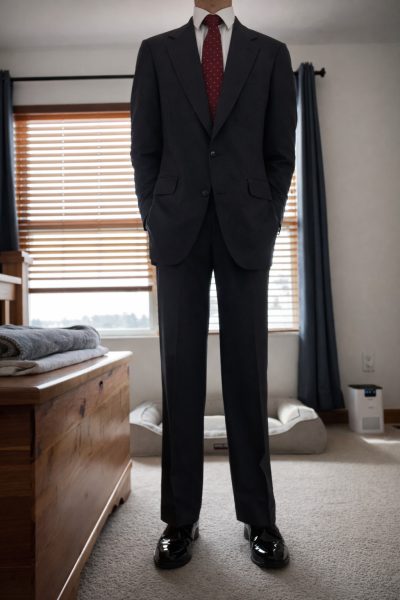
The suit of today is inferior to the suit of the golden age in every single way. The skinny suit has replaced the full cut suit, and just like most skinny cut clothes, it looks terrible. High-waisted trousers with pleats have been replaced with low-rise flat front pants that sit well below the natural waistline, causing the proportions of a man to go out of whack.
When it comes to the structure and quality of a suit from the golden age, it is yet another category that surpasses modern suits. The stitching, structure, and construction are all superior on a golden age suit compared to a modern one, and the materials used in a modern suit are typically a polyester or synthetic blend which not only lacks drape, but also looks horrendous compared to natural materials.
But if comfort is an issue investing in “Natural fibers—cotton, wool, linen—beat synthetics every time for breathability and durability. Synthetics might stretch, but they often trap heat and fade fast. Match your fabrics to the season, and you’ll feel the difference.” This is another quote from The Gentleman’s Gazette.
The first casualty in the decline of menswear was the suit in every way, shape, and form. The decline of the suit was a key part in the decline of menswear, but it wasn’t the only straw that was broken on the way down. Another major casualty was footwear and headwear.
Throughout history, headwear and footwear have been key elements for attire and have served practical purposes in daily life. The history of both of these trace back to prehistoric times, with several sources, including Why Did Men Stop Wearing Hats from The Gentleman’s Gazette, and shoes have many sources supporting the fact that they were made out of a necessity to protect early humans from the environment.
This purpose remained a primary reason for the widespread use of headwear from the start of humanity all the way until the end of the Victorian era. However, with the dawn of the industrial revolution, the expansion of manufacturing allowed for headwear to transition from a utilitarian item to a fashion piece. Stretching from the 1840s to the 1940s, hats became a staple for menswear no matter the wearer’s class or wealth.
Similar to suits, hats experienced their golden age between the 1920s and the 1940s. But following the Second World War, hat wear declined but still remained a staple until the late 50s when Hollywood icons and the younger generation began to ditch the hat. A common myth about the final nail in the coffin for hats was J.F.K. going without a top hat during his inaugural address, and even though this was true, he wasn’t the first to do so.
There are several theories surrounding the myth that J.F.K. killed the hat with this act, but the one I believe is that Kennedy was a scapegoat, and in fact, it was Ike who killed it.
An NPR reporter named Robert Krulwich, whose father was a hat maker, remarked, “I blame Ike, because Ike built the highways that created the cars that lowered the roofs that crushed the hats that changed the fashion that ruined the business that supported the Krulwiches.”
The decline in daily headwear during the 1960s was astounding; most men walked out of their homes without even thinking about wearing a hat. Because of this, the early sixties were the last time where daily hat wearing was a common sight to see, just like wearing a suit or wearing leather shoes, which is my next point.
In the modern world, leather shoes can still be found and are worn more often than fedoras or other dress hats, but the quality is the point I want to focus on.
When it comes to the quality of leather shoes or almost all other menswear items, they have suffered drastically. From The Guardian, it says that shoes have traditionally been made from leather, wood or canvas, but have increasingly been made from rubber, plastics, and other petrochemical-derived materials. So when it comes to comparing the quality of a shoe produced a century ago to a shoe of today that actually costs more, you find something that might be surprising. A shoe of superior quality, build, and stitching will actually cost less than the entry level leather shoe of today, which is inferior in every way to the shoe of the 20s.
This pattern is seen throughout the decline of menswear, companies, and consumer patterns shifted from quality and value to fast fashion and trends. Nowadays, most people don’t buy clothes for the decade; they buy clothes for the season, and that idea has led to the deterioration of not only clothing but also many other products you use.
Across the modern world in nearly every industry, whether it be consumer or industrial, quality has been lost and with it history because it simply breaks down instead of standing the test of time.
So I may be calling for a return to suits and ties as daily wear, but the more important thing that everyone should do is focus on quality over quantity in every way. If you’re going to wear a suit and tie, invest in a piece that’ll serve you for years. If you would rather wear denim, get a pair that’ll last. If you’re gonna buy a house, look for a strong foundation that you can build on. The modern world as a whole has lost quality, and unless we relearn the value of quality, we will keep producing a culture poorly dressed and built to fall apart.