
For some, tragedies are meaningful, but for others, they can become something to joke about. This is commonly thought to be due to some disconnecting the tragedy from its emotional meaning, and turning off the mind from interpreting how they should feel about the event.
From changing words into including people like Charlie Kirk’s last name to photoshopping the face of him onto celebrities and other people, meme-ification has changed over the years.
Previously, with events like 9/11, joking about tragedies was seen as unsympathetic, and overall negative at the time. But today, people edit videos to include footage of the tragedy, and joke about the event.
Now, tragedies become a matter for joking more quickly. “Lowkirkenuinely” which is a mix of low key, genuinely and Charlie Kirk, have grown popular online on platforms such as YouTube, TikTok, and other similar platforms.
Now that some time has passed other tragedies also get joked about, such as the 9/11 terrorist attacks, which use puns, riddles, and sometimes irony, like a conversation in a fictional comedic manner.
Some of this content is created by Artificial Intelligence (AI). Others include photoshopping images, posting funny videos with sounds over them, and a whole lot more.
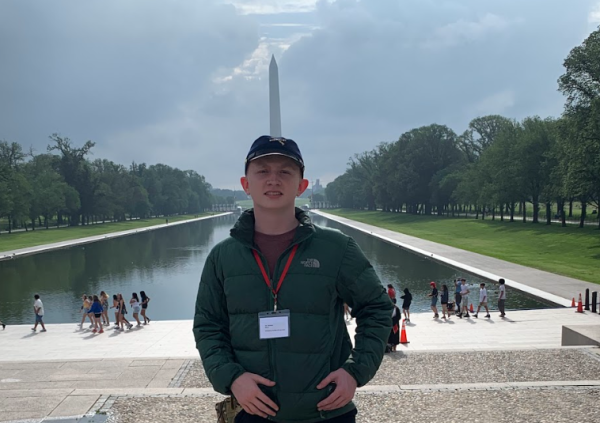
Freshman Carter Purtee thinks that, with the rise of AI, content will likely continue to grow.
“People who don’t have any artistic ability the ability to make stuff, and that will just increase how many jokes like these are made,” he says.
In an article about the rise of the Before-and-After tragedy memes, Joshua Hunt says that, “there is still something off-putting, to me, about the way these images aestheticize grief, penning it into the rigid format of a meme — but this has less to do with the users than with the platforms themselves. Uncomfortable expressions of emotion, including many considered gauche, morbid or insensitive, have been associated with loss for as long as tragedy has been a social experience.”
Social media platforms don’t punish people for these, and instead push for it in order to generate more engagement and likes, and to facilitate more content.

Part of the reasoning for this content might also be due to grieving, or dealing with possible trauma that arose/involved with the event.
Whilst it is understandable that some may be coping with the Charlie Kirk tragedy by creating jokes and memes; that is not extremely likely for most cases.
It is easy to see such memes being disrespectful.
Purtee says, “If it’s something that happens in recent history, or if it’s too serious, I do think that’s a bit insensitive.”
Since it has been less than a year since Kirk’s death, it seems unlikely that they are doing anything but latching onto his death to make it seem less important, and/or as if it wasn’t a big deal.
Not only is it in part desensitizing, it also in part is due to how they see the people or tragedy involved.
In an article about the Memeification of tragedies Ale states, “And that’s exactly the point, according to the logic of memeification those people were not ‘real’ people, they were too different from us to care, on the contrary, they were so different to allow any type of parodic content; difference — once again — plays a crucial role in defining who we care about.”
Although it can be offensive, most people are against taking speech like this away.
“While I personally don’t agree with it, I don’t think we should take away people’s ability to freely speak,” says Purtee. Instead, he says, it’d likely be better to focus on moderating issues that are more insensitive and inappropriate than memes by themselves.