

Trends online oscillate between harmful and wholesome, such as the harmful Tide-Pod challenge, and the wholesome Ice Bucket challenge. However, the “morning shed” trend with over 10,000 posts on TikTok blurs the line of harmful or empowering.
The morning shed trend on popular social media platform Tiktok involves putting on face masks, mouth tape, hair curlers, etc. while you sleep, so when you wake up you have less to do in the morning. However, what was once a simple way to curl your hair at night, or a suggestion to wear mouth tape to stop snoring, has now turned into a whole ordeal of products that go on in the night.
Is this performance for views and laughs or does it perpetuate harmful beauty standards on women?
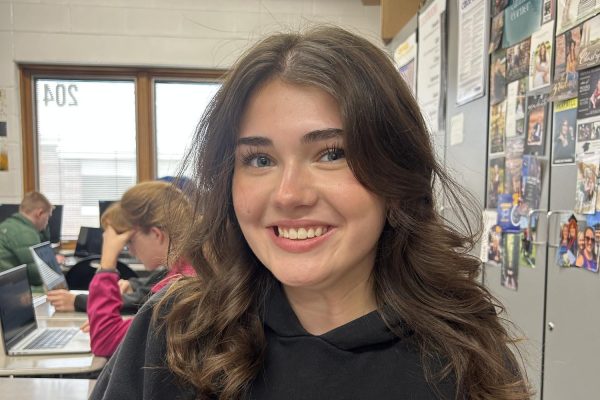
Junior Lily Talik leans towards the humorous side.
“I think [the trend’s] a funny way for girls to show other girls their version of how they wake up in the morning,” she says. “It’s funny seeing all of the crazy ones.”
However, she addresses the reality of if real girls should mimic these crazy night-time routines: “[It turns into a performance] when you’re not doing it for yourself and you’re doing it for the views. It should be authentic to how you want to go to bed and wake up.” Talik says.
On TikTok, the top videos under the “morning shed” hashtag have over a million likes, and 15 million views. Many videos include excessive, single use products like overnight face masks, eye patches, and chin straps or jaw sliming, which can obstruct your airways and increase your risk of sleep apnea.
Some of these extravagant routines are just made for views, but they also have the potential to pressure young girls into believing that this is necessary for beauty.
Freshman Taylor Smith says she feels the pressure to be beautiful, “but not as much as [the people] doing the trends.”
Another concern is that many of the products used in the trend are single use.
Smith believes that ingredients in skincare products are cause for concern: “I definitely think [this will have environmental impacts] because looking at the nutrition label, what’s in it is definitely not all very good for the environment. It goes along with the restock videos for their skincare routine. I don’t think that’s necessary.”
We are in a period of time where social media dominates the outlook of society. Harvard T.H Chan writes that exposure to videos and photos on social media can lead to eating disorders, as well as serious mental health issues and suicidal tendencies. The article writes, “Amanda Raffoul, an instructor at Harvard T.H. Chan School of Public Health and a researcher with STRIPED (Strategic Training Initiative for the Prevention of Eating Disorders), said, ‘The more teenage girls are on social media and exposed to image-based social media in particular, the more likely they are to have poor body image.’”
Nevertheless, Talik and Smith stay positive despite these societal expectations of perfection. Talik says, “I don’t really feel a pressure. I mean, I know that I’m pretty and sometimes I don’t feel like it, but at the end of the day why should I care if other people think my face looks nice? I’m so much more than that.”